In McKinney, Texas, the category of Slopes encompasses the full spectrum of geotechnical engineering services dedicated to evaluating, designing, and mitigating risks associated with inclined ground surfaces. Whether natural terrain or man-made embankments, slopes represent a critical interface between earth and infrastructure. A comprehensive approach to slope management is not merely a structural consideration but a fundamental necessity for protecting property, ensuring public safety, and complying with local development codes. This category unites specialized disciplines—from forensic analysis to engineered retention—providing property owners, developers, and municipal agencies with the tools to manage soil and rock mass stability effectively.
The local geology of McKinney, situated within the Blackland Prairie and Eastern Cross Timbers regions, presents unique challenges. The area is underlain by the Eagle Ford Shale and Austin Chalk formations, often mantled with expansive, high-plasticity clays. These soils are notoriously susceptible to volumetric changes with moisture fluctuation, leading to progressive slope movements and surficial sloughing. The gently rolling topography, punctuated by creek beds and tributaries of the Trinity River basin, creates numerous cut and fill scenarios where differential weathering and erosion can compromise long-term slope integrity. Understanding this geotechnical context is the starting point for any reliable slope stability analysis.
Regulatory compliance in Texas, and by extension McKinney, is governed by a framework of local ordinances and the International Building Code (IBC) as adopted by the state. The City of McKinney’s Subdivision and Development Standards, along with its Engineering Design Manual, mandate specific slope setback, drainage, and erosion control measures. For retained slopes, designs must adhere to IBC Chapter 18 for soils and foundations, with retaining structures often requiring a minimum factor of safety of 1.5 for global stability. Additionally, the Texas Commission on Environmental Quality (TCEQ) enforces stormwater pollution prevention plans (SWPPP) that directly influence slope protection strategies during and after construction to prevent sediment discharge.
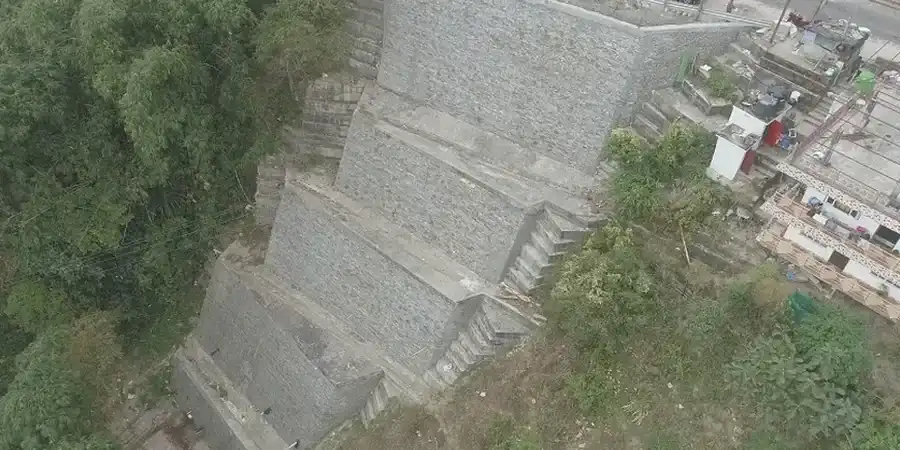
The application of slope engineering in McKinney spans a diverse range of project types. Residential developments on the city’s expanding periphery frequently require evaluation of creek bank stability and the design of remedial grading plans. Commercial and infrastructure projects, such as retail pads or roadway widening along the US 75 corridor, often involve deep excavations where temporary or permanent slope support is critical. In these contexts, a robust retaining wall design becomes integral to the slope solution, not an isolated element. For steep cuts or areas with difficult access, specialized active/passive anchor design provides the necessary lateral restraint to stabilize soil masses that gravity walls alone cannot secure. Ultimately, effective slope management is a multidisciplinary endeavor that safeguards McKinney’s built environment against the persistent forces of nature.
Quick answers
What are the key indicators that a slope on my McKinney property might be unstable?
Key indicators include visible tension cracks in the ground, especially parallel to the slope crest; tilting of fence posts, retaining walls, or trees; persistent ground seepage or unusually saturated areas; and surficial sloughing or small scarps. In McKinney’s expansive clay soils, cyclical bulging and depression of the slope face after heavy rains is a common early warning sign of progressive failure.
When is a professional slope stability analysis required rather than a standard geotechnical report?
A professional analysis is mandatory when proposed grading exceeds a 3:1 (horizontal:vertical) slope ratio, when cuts are deeper than 10 feet, or when structures are located within the zone of influence of a slope. The City of McKinney typically requires a dedicated stability analysis for any development on slopes adjacent to floodplains or where historical mass movement is evident.
How do local expansive clay soils in McKinney specifically affect retaining wall design for slopes?
Expansive clays impose lateral swelling pressures that can far exceed typical active earth pressures, requiring retaining walls to be designed with a greater reinforcement depth and flexible drainage systems. In McKinney, designs must account for seasonal moisture cycles that cause soil creep, necessitating wall embedment below the active zone of moisture fluctuation and often incorporating a chimney drain to prevent hydrostatic buildup.
What is the difference between active and passive anchor systems for slope stabilization?
Active anchors are post-tensioned during installation to immediately apply a designed load to the slope face, actively compressing the soil mass for instant stabilization. Passive anchors, such as soil nails, rely on the slope’s natural tendency to deform to mobilize their resisting force gradually. The choice depends on the required immediacy of restraint and the allowable deformation of the slope, with active systems preferred for critical, time-sensitive cuts.
Location and service area
We serve projects across McKinney Texas and surrounding areas.