Foundation systems serve as the critical interface between a structure and the ground beneath it, transferring all building loads safely into the earth. In McKinney, Texas, the importance of a properly designed foundation cannot be overstated, as the region's unique soil conditions present distinct challenges for residential, commercial, and municipal construction. From expansive clay soils to varying moisture contents, local geology demands a thorough understanding of soil-structure interaction to prevent differential settlement, cracking, and long-term structural distress. A comprehensive approach to foundations encompasses soil investigation, bearing capacity analysis, and selection of the most suitable system for each site.
The foundation category covers a wide spectrum of solutions, ranging from conventional shallow footings and slab-on-grade systems to advanced deep foundation alternatives. For many projects in McKinney, standard spread footings may suffice where competent bearing strata are near the surface. However, when near-surface soils lack adequate strength or exhibit high shrink-swell potential, more robust solutions become necessary. This is where specialized techniques such as pile foundation design come into play, transferring loads through weak zones to deeper, more reliable layers.
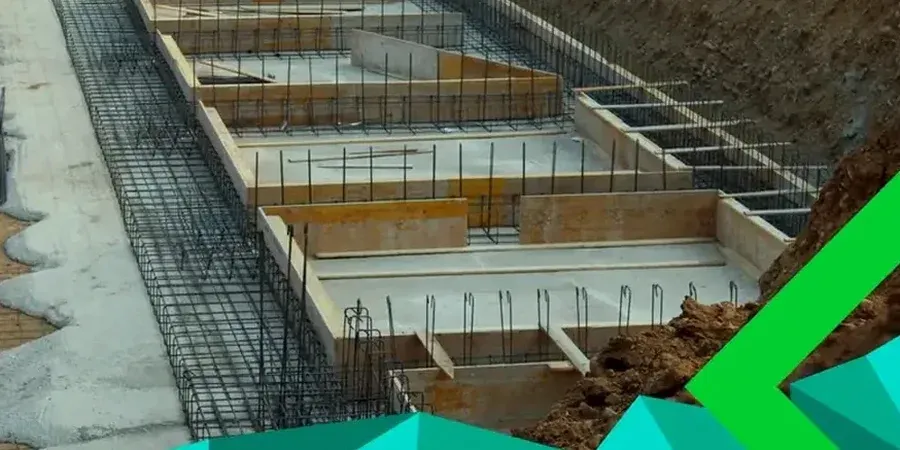
McKinney sits within the Blackland Prairie ecological region, characterized by the Eagle Ford Shale and Taylor Marl formations. These parent materials weather into highly plastic clays notorious for their expansive behavior. Seasonal moisture fluctuations cause these soils to swell upon wetting and shrink upon drying, generating significant vertical movement that can easily damage lightly loaded structures. Geotechnical investigations here routinely reveal clay soils with plasticity indices exceeding 30 and potential vertical rise values that demand careful foundation engineering. Understanding these local conditions is the starting point for any reliable foundation design.
All foundation work in McKinney must comply with the International Building Code (IBC) as adopted by the State of Texas and locally enforced by the City of McKinney. Chapter 18 of the IBC governs soils and foundations, requiring geotechnical reports that address bearing capacity, lateral soil loads, and expansive soil mitigation. Residential foundations additionally follow the International Residential Code (IRC) and the Post-Tensioning Institute (PTI) standards for slab-on-ground construction. These regulations mandate specific reinforcement, embedment depths, and moisture control measures to ensure performance in our demanding soil environment.
Available services
Quick answers
What are the most common foundation types used in McKinney, Texas?
The most common foundation types in McKinney include post-tensioned slab-on-grade for residential construction, which helps resist expansive soil movements, and pier-and-beam systems that elevate the structure above grade. For commercial projects and poor soil conditions, drilled piers or driven piles are frequently specified to bypass the active zone of shrink-swell clay and bear on deeper, stable strata.
How do expansive soils in McKinney affect foundation performance?
Expansive soils in McKinney, derived from Eagle Ford Shale and Taylor Marl, swell when wet and shrink when dry. This cyclical volume change can exert uplift and lateral pressures on foundations, leading to cracking, sticking doors, and uneven floors. Proper design must include moisture barriers, deep bearing elements, or void forms to isolate the structure from these movements.
What permits and inspections are required for foundation construction in McKinney?
A building permit from the City of McKinney is required, along with submission of a sealed geotechnical report and structural foundation plans. Inspections typically include a pre-pour inspection of reinforcement and formwork, a plumbing rough-in check, and a final foundation survey. Compliance with IBC Chapter 18 and local amendments is mandatory throughout the process.
When is a deep foundation system necessary instead of a standard slab?
A deep foundation system, such as drilled piers or piles, becomes necessary when near-surface soils have low bearing capacity, high compressibility, or extreme expansive potential. It is also required when building on fill soils, near slopes, or where uplift loads from wind or seismic forces exceed what shallow footings can resist safely.
Location and service area
We serve projects across McKinney Texas and surrounding areas.