Geotechnical laboratory testing forms the backbone of responsible site development and infrastructure design across McKinney, Texas. This category encompasses the physical analysis of soil and rock samples to determine their engineering properties, including strength, compressibility, permeability, and classification. In a city experiencing rapid residential and commercial expansion onto the expansive Blackland Prairie soils, laboratory data is not merely a formality—it is a critical tool for mitigating foundation distress, slope instability, and pavement failure. From routine grain size analysis (sieve + hydrometer) to specialized strength tests, these activities offer the numerical basis for bearing capacity calculations, settlement predictions, and earthwork specifications.
McKinney’s geology is dominated by the Eagle Ford Group and Woodbine Formation, which yield highly plastic, overconsolidated clays with significant shrink-swell potential. These soils exhibit seasonal volume changes that can exert uplift pressures exceeding 2,500 pounds per square foot on shallow foundations. Laboratory testing quantifies this risk through parameters like the Atterberg limits, which define the moisture content boundaries between solid, semi-solid, plastic, and liquid states. Without such data, engineers cannot reliably design post-tensioned slabs or drilled pier systems that accommodate the cyclic movement characteristic of Collin County’s vertisols. The presence of intermittent sandy lenses and weathered shale further complicates the stratigraphy, demanding precise particle-size distribution curves to evaluate drainage and compaction behavior.
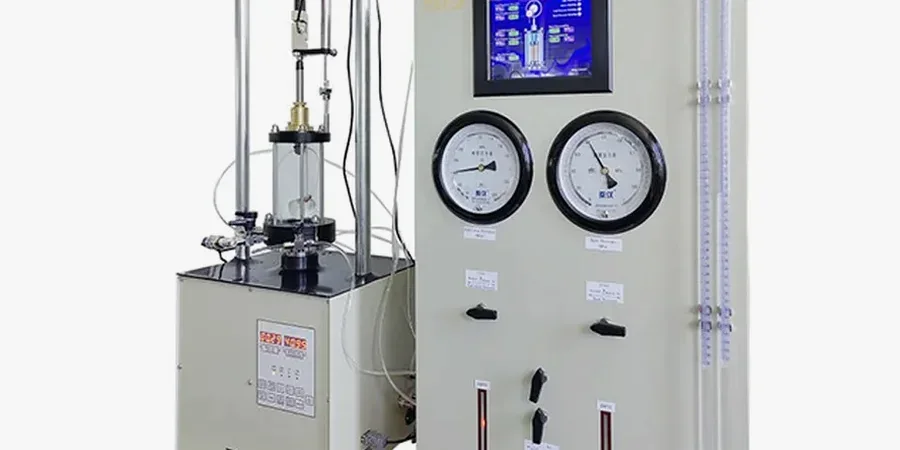
All laboratory procedures in McKinney must conform to the standards adopted by the Texas Board of Professional Engineers and Land Surveyors, which reference ASTM International methods as the default protocol. Key standards include ASTM D422 for particle-size analysis, ASTM D4318 for liquid and plastic limits, and ASTM D2487 for the Unified Soil Classification System. For projects involving public infrastructure or municipal permitting, the City of McKinney’s Engineering Design Manual requires that geotechnical reports include laboratory test results from a certified facility, with specific emphasis on swell testing and sulfate content analysis for subgrade soils. Compliance with these local amendments, alongside the International Building Code provisions for expansive soils, ensures that laboratory deliverables support permit approvals and long-term structural resilience.
The demand for laboratory testing spans a wide spectrum of project types in McKinney. Residential developers rely on soil classification and swell tests to meet warranty requirements and reduce callbacks for foundation repairs. Commercial building projects, particularly tilt-wall warehouses and retail centers along the US-75 corridor, require triaxial shear and consolidation data to optimize footing dimensions and floor slab reinforcement. Public works initiatives, such as the extension of Trinity Falls Parkway or stormwater detention basins, depend on permeability and compaction testing to verify engineered fill placement and seepage control. Even smaller-scale retaining walls and pool installations benefit from basic index testing to avoid costly over-excavation or drainage corrections after construction.
Quick answers
What types of laboratory tests are most critical for construction on McKinney’s expansive clay soils?
The most critical tests include Atterberg limits to quantify plasticity and shrink-swell potential, one-dimensional swell or consolidation tests to predict volume change under load, and grain size analysis to classify the soil matrix. These are often supplemented by sulfate content tests to select appropriate concrete mixes, as local soils can contain gypsum that attacks buried construction materials.
How are laboratory testing standards enforced for geotechnical work in McKinney?
The Texas Board of Professional Engineers and Land Surveyors mandates adherence to ASTM standards for all engineering work. Within McKinney city limits, the Engineering Design Manual explicitly requires that geotechnical reports include laboratory data from accredited facilities, with particular attention to expansive soil parameters. Building officials review these reports during the permitting process to confirm code compliance.
How many soil borings and laboratory samples are typically required for a residential foundation in McKinney?
While requirements vary by project scope, a typical single-family residence in McKinney warrants at least one boring per 2,500 square feet of building footprint, with continuous sampling through the active zone, usually to 15 or 20 feet. Each distinct soil stratum encountered should yield at least one sample for classification and moisture content testing, with additional samples reserved for swell and Atterberg limit analysis.
What is the typical turnaround time for a full suite of geotechnical laboratory tests?
Standard classification tests such as moisture content, Atterberg limits, and sieve analysis can be completed within three to five business days. Tests requiring longer conditioning periods, such as one-dimensional swell or consolidation, may extend the schedule to seven to ten business days. Rush activities are often available but depend on current laboratory backlog and the number of samples submitted.
Location and service area
We serve projects across McKinney Texas and surrounding areas.